Project: HUNGER
Archive: Digital Oral History Archive
Collection: “Testimonies of the Mass Famine of 1946–1947 in Bessarabia”
Collection ID: HUNGER-DOHA-COL-001
Explore Сollection - 003
Collection Description
The collection “Testimonies of the Mass Famine of 1946–1947 in Bessarabia” is an integrated component of the interdisciplinary research and artistic project “HUNGER,” created by the artist Yona Tukuser.
About the Project “HUNGER”
Research Context
The collection documents one of the least studied humanitarian catastrophes in post-war Eastern Europe: the mass famine of 1946–1947 in Bessarabia, (Odesa Region, Ukraine). It preserves eyewitness testimony recorded at a moment when the last surviving witnesses were still alive, creating a unique historical source for future research.
Scope of the Collection
The collection comprises 51 video interviews recorded during an independent field research expedition to Southern Bessarabia between 10 April and 21 May 2018.
During the expedition, 86 eyewitnesses and descendants of famine survivors were interviewed across twelve settlements in the Odesa region of Ukraine.

Southern Bessarabia (Odesa Region, Ukraine)
Collection Metadata
-
Collection title: “Testimonies of the Mass Famine of 1946–1947 in Bessarabia”
-
Collection ID: HUNGER-DOHA-COL-001
-
Media type: video (MOV)
-
Number of interviews: 51
-
Language: Bulgarian
-
Field research expedition: 10 April – 21 May 2018
-
Geographic coverage: Southern Bessarabia, Ukraine
-
Research Lead and Field Researcher: Yona Tukuser
Tags
-
1946–1947 famine
-
Bessarabia
-
Oral history testimonies
-
Grain confiscation
-
Forced collectivization
-
Deportation
-
Trauma memory
-
Cannibalism narratives
-
Child vulnerability
-
Mass death
-
Survival strategies
-
Survival ethics
Archival Content
The materials document oral testimonies of the mass famine of 1946–1947 in Southern Bessarabia and constitute a corpus of primary historical sources for the study of the 1946–1947 famine and the cultural memory of Bulgarian communities in the region.
Archival Structure of Records
Each archival record in the collection includes:
-
a video interview
-
a transcript
-
a related artwork from the “HUNGER” project
This creates a multi-layered representation of oral testimony as both a primary historical source and its artistic interpretation.
Each record has a unique identifier in the format HUNGER-DOHA-XX-XX, ensuring navigation and citation.
Tags
-
1946–1947 famine
-
Bessarabia
-
Oral history testimonies
-
Grain confiscation
-
Forced collectivization
-
Deportation
-
Trauma memory
-
Cannibalism narratives
-
Child vulnerability
-
Mass death
-
Survival strategies
-
Survival ethics
Research Methodology
Fieldwork for the "HUNGER" project (Southern Bessarabia, 10 April–21 May 2018) followed an emergent, situation-responsive methodology shaped by mobility, contingency, and encounter rather than fixed planning. Access to testimonies developed through spontaneous community interactions in each settlement, where local residents often guided the search for elders with lived or inherited memories of the 1946–1947 famine.
Interviews were conducted with voluntary consent in everyday environments, recorded in situ with portable video equipment, preserving both narrative and context.
Intuition functioned as a key methodological instrument, guiding movement and selection of interlocutors through sensitivity to social cues and moments of readiness for dialogue.
The ethical core of the project is trust, which was created in each encounter through presence. It was within this space of trust that dialogue, testimony, and ultimately the formation of the archive became possible.
The methodology integrates oral history, ethnographic fieldwork, and visual documentation within a non-linear framework defined by mobility, encounter, trust, intuition, and co-produced testimony.
Citation and Rights
Recommended Citation
In-text citation:
Tukuser, Y. 2018, HUNGER-DOHA-XX-XX
Reference list:
Tukuser, Y. (2018) Project “HUNGER”. Digital Oral History Archive. Collection: “Testimonies of the Mass Famine of 1946–1947 in Bessarabia”. Digital archive available at:
https://www.yonatukuser.art/oral-history
© Yona Tukuser
Expedition Map
Explore the Collection 001:

Identifier: HUNGER-DOHA-01-01
Respondent: Strezev Mykhailo Petrovych
Date of birth: 1931
Place of residence during the 1946–1947 famine: village of Hlavani, Novoivanivskyi district, Odesa Region, Ukraine
Interview date:10 April 2018
Original format: video (MOV)
Duration: 03:09
Language: Bulgarian
Field researcher: Yona Tukuser
Interview Transcript
I survived the famine of 1946. The famine was extremely severe. There was no bread. We went into the fields and picked grass in order to boil and eat it. We endured that famine with great hardship.
At that time I worked as a tractor driver at the machine-tractor station (MTS), and from Alyaha we were given one sack of grain each — that is how we survived. We had a cow. But our neighbours died. Many people died; on our Chapaeva Street only about one third remained alive.
The city council selected illiterate men, those who did not know even the alphabet, and sent them to search people’s homes and collect all their grain. Even if a person had only one bucket of grain, they took it away. Many people died because of this.
Most residents of Hlavani were saved because they worked at the newly built railway station, in the stone quarry, and at the MTS. In other villages the situation was much worse, almost hopeless.
If you go to the cemetery in Sambatyr, there is a long trench, about 100 meters long — a mass grave. A cart used to go through the village collecting people; they entered houses and gathered frozen, starving bodies. Even half-dead people were loaded.
© Yona Tukuser

Identifier: HUNGER-DOHA-01-02
Respondent: Tukuser Ivan Ivanovych
Year of birth: 1935
Place of residence during the 1946–1947 famine: village of Hlavani, Novoivanivskyi district, Odesa Region, Ukraine
Interview date: 11 April 2018
Original format: video (MOV)
Duration: —
Language: Bulgarian
Field researcher: Yona Tukuser
Interview Transcript
My father worked in the labor army in Chelyabinsk from 1944 until January 1947. At that time, Bulgarians were not trusted to fight, and they were sent to labor camps instead.
We had one ton of grain hidden in the barn, buried in the ground, and representatives of the village administration — local Komsomol members from Hlavani — came and took everything from us.
In January 1947, when my father returned from Chelyabinsk, he went to work at Alyaha, transporting grain. There he was given white bread, and he fed us with it. But after three months he had a conflict with the management.
At Alyaha, grain was being loaded and sent abroad. My father began to protest and told his superiors: “People are dying, and you are exporting grain.” After that he was dismissed from his job.
At that time the Party was the leading and guiding force. If the Party committee secretary was against you, the director could do nothing. If you did not agree with Soviet authority, you simply lost your job — and he was fired.
After that we moved to Lviv.
© Yona Tukuser

Identifier: HUNGER-DOHA-01-03
Respondent: Nastradin Lukeriya Konstantinivna
Year of birth: 1922
Place of residence during the 1946–1947 famine: village of Hlavani, Novoivanivskyi district, Odesa Region, Ukraine
Interview date: 29 April 2018
Original format: video (MOV)
Duration: —
Language: Bulgarian
Field researcher: Yona Tukuser
Interview Transcript
Hunger. Hunger. Hunger. Many people died. Half of the village died out.
One woman, during the famine, ate her own child.
We were going to work at Alyaha, and on the road we saw a woman stepping over a dead horse. She bent down, tore off pieces from it, and ate them. During the famine.
And that was not the only case. Another time I was walking and saw a man gnawing at a dead body.
© Yona Tukuser

Identifier: HUNGER-DOHA-01-04
Respondent: Vasilina Ivanovna Tutova
Year of birth: 1925
Place of residence during the 1946–1947 famine: Village of Hlavani, Novoivanivskyi District, Odesa Region, Ukraine
Interview date: 29 April 2018
Original format: video (MOV)
Duration: —
Language: Bulgarian
Field researcher: Yona Tukuser
Interview Transcript
In 1946, there was no rain, the harvest was poor, and famine began. Those who had nothing to eat died, while those who still had some food reserves survived. My father was a furrier. He made sheepskin coats, and because of that we did not die of hunger. Many people died during that time. Their bodies were loaded onto horse-drawn carts and buried in one large pit at the old cemetery. This happened in 1946.
We always had at least something to eat. But on the first day of Christmas, we had nothing left. That evening my mother said to my father, "I'll go and boil some water." She simply boiled water, and each of us drank a mug of hot water. Just water.
After a while, we heard a knock at the door. At that time my father was working at a military unit in Izmail. His supervisor came and said, "Adamovich! Take your bag, the food supplies have arrived!" They were issued 12 kilograms of flour, 1 kilogram of sugar, rice, cooking oil, and butter.
My father went to collect the food. My mother immediately began kneading dough and baked flatbreads. We each ate one or two flatbreads and finally had something to satisfy our hunger. That was all.
I do not know what those who had no food ate. Some people went into the fields and gathered whatever they could find: ground squirrels, dead animals, anything. They cooked it and ate it. Others went to rubbish dumps to eat the meat of dead animals.
Driven by hunger, people went into the fields to catch ground squirrels and eat them. They also ate sparrows.
I know of one woman, Isyrliicho Ivantsa, who ate her own child. She had begun eating the child when her older son discovered her. He was so horrified that he was left speechless and ran away. Relatives took him in and raised him. His mother lost her mind from hunger and died soon afterward.
© Yona Tukuser

Identifier: HUNGER-DOHA-01-04-2
Respondent: Prodanova Maria
Year of birth: 1958
Place of residence during the 1946–1947 famine: Village of Hlavani, Novoivanivskyi District, Odesa Region, Ukraine
Interview date: 29 April 2018
Original format: video (MOV)
Duration: —
Language: Bulgarian
Field researcher: Yona Tukuser
Interview Transcript
My mother was born in 1939 and survived the famine. I often asked her to tell me about those years, and she spoke about the famine many times. My grandmother was born in 1914.
My mother often told me how terrible those times had been. In the spring, when the grass began to grow, life became a little easier. People started boiling grass and eating it.
My mother told me that people were dying of hunger. My grandmother went into the fields to catch ground squirrels. People also ate sparrows. They made flatbreads from corn cobs, which at that time were even considered a delicacy. Many people died.
One boy lost both of his parents and had nothing to eat. He went to the village dump. People saw him using a hook to pull the decaying carcass of a dead animal toward himself. One man took pity on the boy, brought him into his home, and did not allow him to eat the meat of the dead animal. He raised the child, and the boy survived.
(The boy was known by the nickname Bobov-Kostandin. He lived on Kotovsky Street.)
© Yona Tukuser

Identifier: HUNGER-DOHA-01-05
Respondent: Tukuser Valentyna Vasylivna
Year of birth: 1952
Place of residence during the 1946–1947 famine: Village of Hlavani, Novoivanivskyi District, Odesa Region, Ukraine
Interview date: 30 April 2018
Original format: video (MOV)
Duration: —
Language: Bulgarian
Field researcher: Yona Tukuser
Interview Transcript
My parents had a calf, which they kept locked inside a room in the house. Their neighbour, Ivan Tutov, pulled it out through the window and stole it.
My mother told me about our neighbour Pena, who had eight children. All of them were swollen from hunger, and the children cried constantly because they were starving. My mother brought each of them a small flatbread made from mustard. However, they all died, except for one boy.
The boy survived by going to the rubbish dump, where he ate the meat of dead horses, dead dogs, grass, and whatever else he could find. Of the eight children, he was the only survivor.
Many people in the village died from starvation. There was also a typhus epidemic. People said that the famine had been man-made: first there was a poor harvest, and then the grain was taken away from the people. My mother also told me that people even resorted to cannibalism.
© Yona Tukuser

Identifier: HUNGER-DOHA-01-05-2
Respondent: Melaniya Georgieva Mutafchi
Year of birth: 1954
Place of residence during the 1946–1947 famine: Village of Hlavani, Novoivanivskyi District, Odesa Region, Ukraine
Interview date: 30 April 2018
Original format: video (MOV)
Duration: 03:28
Language: Bulgarian
Field researcher: Yona Tukuser
Interview Transcript
My mother told me that during the famine their neighbor had four children. The mother thought she had not seen the children on the street for a long time and decided to go and see what had happened.
When she entered the house, she saw one girl sitting by the stove, sucking her own hair from hunger. And the youngest child was lying in the cradle with a bitten-off leg and arm that had been bitten by the mother.
© Yona Tukuser

Identifier: HUNGER-DOHA-02-01
Respondent: Stoyanova Anna Stepanivna
Year of birth: 1933
Place of residence during the 1946–1947 famine: Village of Suvorove, Suvorovskyi District, Odesa Region, Ukraine
Interview date: 21 April 2018
Original format: video (MOV)
Duration: —
Language: Bulgarian
Field researcher: Yona Tukuser
Interview Transcript
I experienced the famine. The entire village was starving. Hunger was everywhere; there was nothing to eat. Before that, there had been the war.
The wealthier families were rounded up, loaded onto trains, and deported to Siberia, where they perished. Their small children died even during the journey. I know of one family who told how, after arriving in Siberia, they were taken off the train, given only an axe, and abandoned in the taiga. They began building themselves a small shelter there. But these people were not kulaks; they were simply hardworking.
My father caught fish for the state and managed to bring some home for us. My mother gathered lamb's quarters and baked small flatbreads from it. That is how our six children survived. Later, all the grain was taken from the people, and then the famine began.
I heard that in Karamaryn (Holytsia), a woman ate her own children. Her husband, Petro Tsviatkov, was in a labor camp in Chelyabinsk. When he returned, he was told what had happened, and he left her. Afterwards, the woman lost her mind, lived alone, and eventually died.
Many people hid grain inside mattresses and beds because those places were not searched. Everywhere else, officials searched people's homes to confiscate their grain, and that is how the famine began. There was nothing left. All the grain was collected from the people and stored in granaries, where it rotted while people died of starvation.
People were not accustomed to collective farms and did not know what they were. Everything was taken from them to force them to work in the collective farms. The grain remained in the granaries, but nothing was given to the people.
Some children used sticks to poke through cracks in the granary walls in an attempt to retrieve a few grains. They were often beaten severely for doing so. The children hid the grains in their mouths so they could take them home.
© Yona Tukuser

Identifier: HUNGER-DOHA-02-01-2
Respondent: Stefanija Stoyanova
Year of birth: 1962
Place of residence during the 1946–1947 famine: Village of Suvorove, Suvorovskyi District, Odesa Region, Ukraine
Interview date: 21 April 2018
Original format: video (MOV)
Duration: —
Language: Bulgarian
Field researcher: Yona Tukuser
Interview Transcript
There was a story about my husband’s grandfather: his children died of hunger, and he stole a handful of millet, hiding it in his pocket. The millet was found, and he was sent to prison, where he died. He was 23 years old.
© Yona Tukuser
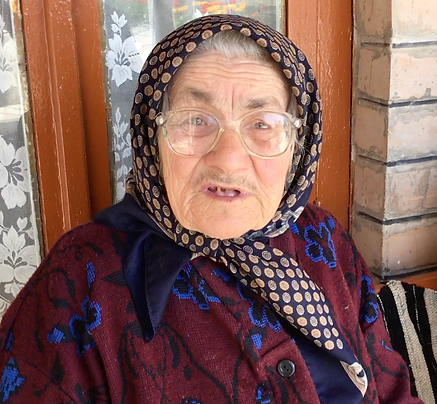
Identifier: HUNGER-DOHA-02-02
Respondent: Bicheva Maria Ivanovna
Year of birth: 1933
Place of residence during the 1946–1947 famine: Village of Suvorove, Suvorovskyi District, Odesa Region, Ukraine
Interview date: 21 April 2018
Original format: video (MOV)
Duration: —
Language: Bulgarian
Field researcher: Yona Tukuser
Interview Transcript
We had land, sheep, a cow, a horse, and grain — everything was taken from us in 1944.
Many people died. People were taken away in carts. Everyone was starving. It was very frightening. There was nothing to feed the children.
© Yona Tukuser

Identifier: HUNGER-DOHA-03-01
Respondent: Maria Lefterova
Year of birth: 1924
Place of residence during the 1946–1947 famine: Village of Kamyanka, Bolgrad District, Odesa Region, Ukraine
Interview date: 22 April 2018
Original format: video (MOV)
Duration: —
Language: Bulgarian
Field researcher: Yona Tukuser
Interview Transcript
We were starving. I experienced famine in my childhood, and then after I got married, another great famine began.
In the village, people were dying right on the streets like dogs. Where they died, they were left there. During the famine it was very frightening.
Many people, the so-called “kulaks,” were deported from the village to Siberia, and many of them died on the way.
One family killed their child and ate it.
Everyone is hungry! What can they do?
There is nothing to eat! Besides gnawing and eating.
People were terribly weak.
A man is dead! They bite him! They eat him!
They also ate their child.
© Yona Tukuser

Identifier: HUNGER-DOHA-03-02
Respondent: Petrov Trifon Ivanovych
Year of birth: 1936
Place of residence during the 1946–1947 famine: Village of Kamianka, Bolgrad District, Odesa Region, Ukraine
Interview date: 22 April 2018
Original format: video (MOV)
Duration: —
Language: Bulgarian
Field researcher: Yona Tukuser
Interview Transcript
The famine began. I remember it very well. We were sitting at home, looking out of the window: a person was walking with a blanket over their head. They kept walking, leaning sometimes on a fence, sometimes on a tree… and then they fell.
The snow was falling and falling, and no one came out to pick them up. People were looking for survival. They left their houses, went to relatives, but they could not reach them and died on the way.
People here could have avoided starvation. There was everything here, but it was taken away. People went from yard to yard with sharp iron sticks, searching and taking everything.
My mother and I buried a barrel of grain in the barn. A few days later they came and started poking the ground in the barn with sharp sticks, looking for a hidden pit. The pit was in the corner, and the barn was large, so they eventually stopped and left without finding anything.
My mother was very afraid that someone might eat me. Every week we went to visit her mother in Suvorove. She was starving. My mother cooked mamaliga, and we went to see her.
We walked across the fields, near the liman, and my mother said: “Someone will jump out, grab this child, and eat him.”
I heard that in Orikhivka, mothers ate their own children. If someone died, they were not buried but eaten. Many people died here, and when the snow melted, the bodies were collected by cart.
© Yona Tukuser

Identifier: HUNGER-DOHA-04-01
Respondent: Stankov Petar Sergeevich
Year of birth: 1933
Place of residence during the 1946–1947 famine: village of Bagate, Novoivanivskyi district, Odesa Region, Ukraine
Interview date: 23.04.2018
Original format: video (MOV)
Duration: —
Field researcher: Yona Tukuser
Interview Transcript
We had an artificial famine in 1946–1947. If grain had not been taken from people, there would have been no famine. At that time they said that grain was transported to the banks of the Danube, piled in heaps, and left there to rot. It was taken from the people but not exported in time, so it simply rotted there.
An artificial famine. It was done to force people into collective farms. People did not want to join the kolkhoz at that time.
We had grain. There was a lot of it in the attic. When the search teams began to come, my father found out. He came up with a plan: he built a false wall about one and a half meters long inside the room and made a hatch to the attic. We did this at night. My mother plastered the wall and then whitewashed it with lime. My father climbed into the attic and poured sacks of grain into it. In the attic we had husks from seeds, and he scattered them everywhere to camouflage the hatch.
The next day they came: the feldsher Yosu, Gyozu, and Volodya. They walked everywhere with metal rods: in the yard, then they climbed into the attic. My father had prepared it in a way that no one would believe we had already collected everything. He left a few sacks of grain and corn. Our family was large: four children, father, mother, grandmother, and Aunt Marina, eight people in total. Who would believe that we had no grain at all and were still surviving? They climbed into the attic and took everything.
My mother was crying: “Leave us at least something!” Nothing. They took everything. My mother was crying. The sisters were crying too. I was also in tears. They showed no mercy. It was humiliation.
After that my father bought a hand mill and ground flour, my mother baked bread, and that is how we survived. If he had not done this, we would not be alive.
The artificial famine… At a certain moment a person would begin to swell—his whole body and face. And a few days later I would hear that the person had already died. Before death, people would become swollen. It was terrifying… terrifying. Their bodies looked like wax. When you look at a candle, that is what their bodies looked like. The body was not pink anymore, as if there was no blood left—like wax.
© Yona Tukuser

Identifier: HUNGER-DOHA-04-01-3
Respondent: Opanas Ivanovych Pereverza
Year of birth: 1942
Place of residence during the 1946–1947 famine: Village of Bahate, Suvorovskyi District, Odesa Region, Ukraine
Interview date: 23 April 2018
Original format: video (MOV)
Duration: —
Language: Bulgarian
Field researcher: Yona Tukuser
Interview Transcript
I remember the people who came to take our grain. If I saw them today, I would recognize them. They wore coats, carried sticks, and had holsters. They went from house to house. They had rifles. They said: “If you do not give it, we will send you to Siberia.” No one resisted.
The famine happened like this: there was no harvest in the fields, people had nothing to sow, and there was a drought. Many people died of starvation. At that time there was also disease — typhus in 1945, 1946, and 1947.
© Yona Tukuser

Identifier: HUNGER-DOHA-04-01-2
Respondent: Arnautov Yukhym Petrovych
Year of birth: 1928
Place of residence during the 1946–1947 famine: village of Bagate, Novoivanivskyi district, Odesa Region, Ukraine
Interview date: 23.04.2018
Original format: video (MOV)
Duration: —
Field researcher: Yona Tukuser
Interview Transcript
During the Second World War, Bulgarians in Bessarabia were not sent to the front because the Soviet authorities did not trust them, as Bulgaria was an ally of Germany.
Many people died of starvation. People would be walking, collapse on the road, and die from hunger. The collective farm provided carts so that people could go around the village collecting the dead and then transport and bury them.
Many people died from stomach disorders. Those who ate dog meat survived; those who ate cat meat died. Cat meat is poisonous.
© Yona Tukuser
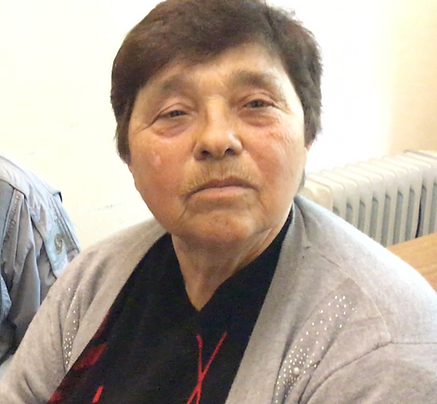
Identifier: HUNGER-DOHA-04-01-4
Respondent: Varvara Mykhailivna Marinova
Year of birth: 1936
Place of residence during the 1946–1947 famine: Village of Bahate, Suvorovskyi District, Odesa Region, Ukraine
Interview date: 23 April 2018
Original format: video (MOV)
Duration: —
Language: Bulgarian
Field researcher: Yona Tukuser
Interview Transcript
My mother’s parents were deprived of their property. Her grandfather was sent to Siberia, and her grandmother was expelled from the house. She wandered for a time and later went to live in Moldova. The “hawks” who took everything from the house and loaded it onto carts kept most of it for themselves.
I remember a woman who used to come to us — the wife of Iliiko Kosti — asking for small pieces of cabbage stalk. I remember how she looked: her hands were swollen and almost transparent, with skin hanging in strips; her face was also swollen and terrifying.
One woman told my mother: “Do not let your child go outside, because Iliikov’s wife said she will eat your child.” She said this about my younger sister. After that, my mother no longer let my sister go outside. But in general, no — there was no cannibalism in our village.
At that time people ate cattail roots: they dried them, ground them on millstones, and baked flatbreads from them.
© Yona Tukuser

Identifier: HUNGER-DOHA-05-01
Respondent: Dimova Vira
Year of birth: 1926
Place of residence during the 1946–1947 famine: Novoselivka village, Artsyz district, Odesa Region, Ukraine
Interview date: 30.04.2018
Original format: video (MOV)
Duration: —
Field researcher: Yona Tukuser
Interview Transcript
In 1946–1947 I was in Novoselivka, where I was born. We suffered greatly during the famine. We had a cow, but it was stolen. My father died of hunger. We sold our clothes to buy grain. There were people who ate carrion, as well as dogs and crows.
Many people died. Grain was taken away from them. Those who managed to hide it survived, and those who could not had it confiscated. There was one wealthy man: when all his grain was taken, his entire family died of starvation.
One woman had a small child who constantly cried from hunger, saying “give, give,” but she had nothing to give. She took the child to the cemetery and left it there. The child kept crying “give, give,” and in this way the poor child died.
© Yona Tukuser

Identifier: HUNGER-DOHA-05-03
Respondent: Kostiantyn Dmytrovych Todorov
Year of birth: 1942
Place of residence during the 1946–1947 famine: Village of Holmske, Novoivanivskyi District, Odesa Region, Ukraine
Interview date: 30 April 2018
Original format: video (MOV)
Duration: —
Language: Bulgarian
Field researcher: Yona Tukuser
Interview Transcript
In 1946 there was famine. There was nothing to eat. We ate boiled lamb’s quarters. Our stomachs were full, but there was no feeling of nourishment.
My uncle used to catch ground squirrels: he would pour water into their burrows, the animal would come out, and he would strike it with a stick and put it into a bucket.
Grandfather Lazar would go to his daughter-in-law to ask for food, but she would not give him any. He became weak and went into the garden to eat whatever grass he could find. Grandfather Lazar was a very religious man; he prayed constantly. He died. A few days later, his daughter-in-law’s son also died.
As a boy, I was treated better as a male child, while my sister, being a girl, was treated worse. She was considered doomed. I remember how grandmother Rada had a single wooden basin and said: “Be careful not to break this basin, because Olena will die, and we will have nothing to bury her in.” She said it as if she were speaking not about a child, but about an animal.
Hunger suppresses human feelings to such an extent that a person loses compassion. But my sister survived against all odds. I remember there was no food left in the pot, only a wooden spoon inside, and she chewed it to try to eat something. She survived by miracle.
At that time, people were buried in their own gardens — there was no strength to carry them to the cemetery or dig proper graves.
My father said that there was cannibalism. People ate children.
There were local activists in the village who went around confiscating grain from people. The grain was collected and later partially rotted. These local activists — poor people who had squandered their own land — were envious of more successful farmers and helped the district commission confiscate grain.
In Holmske, two-thirds of the population died from starvation.
© Yona Tukuser

Identifier: HUNGER-DOHA-06-02
Respondent: Pelageya Stepanivna
Year of birth: 1927
Place of residence during the 1946–1947 famine: Vinogradivka village, Bolhrad district, Odesa Region, Ukraine
Interview date: 05.05.2018
Original format: video (MOV)
Duration: —
Field researcher: Yona Tukuser
Interview Transcript
When the war ended, the famine began. There was no harvest. Those who had grain had it taken away. We had nothing. My parents died during the famine year, as did my brothers and sisters. We had nothing to eat.
People lay at home and died. There were no potatoes or onions, no harvest at all. People ate grass. The canteen gave one piece of mamaliga. I buried all those who died. My sister survived, and the two of us remained alive. We had relatives, but they did not help us—everyone cared only for themselves. Many people died in the village. Those who had nothing to eat died; those who had reserves survived.
There were cases of people eating other people. A child walking along the road would be caught, taken away, and eaten. Yes, they ate children.
© Yona Tukuser

Identifier: HUNGER-DOHA-06-03
Respondent: Opanas Mykolaiovych
Year of Birth: 1956
Grandmother's Place of Residence during the 1946–1947 Famine: Vynohradivka village, Bolhrad District, Odesa Region, Ukraine
Interview Date: 5 May 2018
Original format: video (MOV)
Duration: —
Field Researcher: Yona Tukuser
Interview Transcript
The respondent's grandmother recounted that there was a famine in 1946–1947. She once visited neighbors who had two children. She brought them a bowl of salted tomatoes and noticed that something was cooking in a cast-iron pot. Some time later, she realized that one of the children in that family had disappeared. She believed that the child had been the one cooking in the pot that day and that the family had eaten the child.
The grandmother also recalled that she had preserved a 500-kilogram barrel of tomatoes and later distributed them to people, helping those who were suffering from hunger.
© Yona Tukuser

Identifier: HUNGER-DOHA-06-05
Respondent: Olga Semenivna Kulaksyz
Year of Birth: 1961
Parents-in-law's Place of Residence during the 1946–1947 Famine: Vynohradivka village, Bolhrad District, Odesa Region, Ukraine
Interview Date: 5 May 2018
Original format: video (MOV)
Duration: —
Field Researcher: Yona Tukuser
Interview Transcript
My father-in-law and mother-in-law told me that there was a drought and a poor harvest in 1946–1947. If the authorities had not confiscated the food reserves people had, there would have been far fewer victims of the famine. They said there had been no direct order to take every last grain from people. The order was to collect grain so it could be shared with other regions that were also experiencing famine.
I was born in Comrat. There were many cases of cannibalism. People ate their own children. It was so horrifying that no one wanted to speak about it openly; such stories were shared only in secret. Hunger is merciless, and it drove people to the point of eating their own children.
My grandmother told me that, of her seven children, only my father survived. She buried her children and her husband, who died of famine, at the edge of the family garden. Flowers always grew there, and their graves were marked with headstones.
There was not only no bread, there was no food of any kind. People boiled grass and tree bark. Among us, the Gagauz, it is customary for girls to receive a substantial dowry. When the famine began, families took these dowries to sell or barter for grain. They traveled on foot for days and even weeks. They exchanged their belongings for grain, returned home to leave it there, and then immediately set out again in search of food. In this way, many people managed to survive.
I know that in the village of Kotlovyna, out of a population of 5,000, around 3,000 people died of famine. Today, the current generation in that village does everything possible to preserve the memory of those who perished. They have established a museum dedicated to the victims of the famine.
All the elderly people say the same thing: "God forbid you should ever know what hunger is." It is the most terrible thing. It is worse than war. It is horrifying.
I remember that my father-in-law always used to say that more than half of the previous year's grain harvest should always remain in storage. Half of the harvest was used to feed livestock and poultry, and part of it was milled into flour for bread. If there was any surplus, it should never be sold until the new harvest was safely stored in the attic. The old harvest had to remain there until then.
© Yona Tukuser

Identifier: HUNGER-DOHA-06-01
Respondent: Illya Fedorovych Bozhylov
Year of birth: 1929
Place of residence during the 1946–1947 famine: Village of Vynohradivka, Bolhradskyi District, Odesa Region, Ukraine
Interview date: 05 May 2018
Original format: video (MOV)
Duration: —
Language: Bulgarian
Field researcher: Yona Tukuser
Interview Transcript
We survived the famine. It was a terrible famine. There was a drought. For an entire year there was neither rain nor snow. Then, at the end of winter, snow fell — two meters high — but by then it was already useless.
The state took the grain. There was a slogan: “Everything for the front, everything for victory!” Everything was taken down to the last measure. Because of the drought, nothing grew. People died of hunger, while everything was still being taken from them. They were required to deliver meat, eggs, milk, and wool.
Many people died. Every day a brigade with a cart collected the dead — 10 to 15 people — and buried them in a mass grave. It was terrifying.
People ate cats and died because they did not know how to prepare them properly. Koreans and Chinese know how to prepare them, but our people did not, and they were poisoned and died.
I worked as an accountant in Karakurt. There was an incident there: a man’s wife died, and he remarried. He had a small daughter. One morning I arrived and saw that part of the girl’s thigh had already been eaten. They were taken to the village council, locked inside, and froze to death before they could even be brought to trial.
My grandfather died of hunger in May 1947.
© Yona Tukuser

Identifier: HUNGER-DOHA-07-01
Respondent: Ulyana Balcheva
Year of birth: 1935
Place of residence during the 1946–1947 famine: Krynychne village, Bolhrad district, Odesa Region, Ukraine
Interview date: 06.05.2018
Original format: video (MOV)
Duration: —
Field researcher: Yona Tukuser
Interview Transcript
My father was taken to a labor camp in Karaganda, where he died at the age of 30 from a stomach illness. Grain was taken from the people here, and in 1946 the famine began. In the collective farm, people were given food rations.
Many people died and were transported away on carts. People were exhausted and had nothing to eat. I heard that people in our village were eating people.
I heard how one man, Georgiy, sent his child to relatives, and the child never returned. The father went to see what had happened. When he arrived, they had already slaughtered the child, cooked it, and served him a bowl of broth. When it was served, he saw the fingers and toes of his own child in the bowl. This was told to me by my mother.
© Yona Tukuser

Identifier: HUNGER-DOHA-07-03
Respondent: Krystyna Ivanivna Samunzhi
Year of birth: 1938
Place of residence during the 1946–1947 famine: Village of Krynychne, Bolhradskyi District, Odesa Region, Ukraine
Interview date: 08 May 2018
Original format: video (MOV)
Duration: —
Language: Bulgarian
Field researcher: Yona Tukuser
Interview Transcript
In 1946–1947, the famine began. There was no harvest in the fields. Many people died of starvation. Grain was being confiscated.
In our yard, a barrel of grain was hidden in the barn, but they found it and took it away. In this way, hidden grain was discovered everywhere, and people remained hungry and died.
In our family, no one died.
I remember how we went into the fields to collect ears of grain and also dug out grain that mice had hidden in burrows, which we then ground into flour.
Sometimes police officers came to the village, and if they found that people were grinding grain on millstones, they would take the millstones and throw them to the ground so that they broke into four pieces — so that we could no longer make flour ourselves.
By the riverbank, people also hid their grain.
© Yona Tukuser

Identifier: HUNGER-DOHA-07-05
Respondent: Varlakova Varya
Year of birth: 1930
Place of residence during the 1946–1947 famine: Krynychne village, Bolhrad district, Odesa Region, Ukraine
Interview date: 08.05.2018
Original format: video (MOV)
Duration: —
Field researcher: Yona Tukuser
Interview Transcript
In 1946 grain was taken from the people. In 1946 the famine began. People were dying, houses were left empty, and the dead were loaded onto carts. I was 16 years old at the time. There was no harvest in 1946. They went from house to house, and wherever they found grain, they took it away.
Our people became communists and oppressed others. I am telling it as it was. If you stole something from the collective farm, a communist would report you and you would definitely be sent to prison. When we went to work in the collective farm, there was a lot of grain there. We wanted to take some for ourselves because there was nothing left in the village.
The Russians took the men to the mines in Karaganda, and the men wanted to bring their wives and children with them, so they went there and survived. Many people died of hunger here. There was a lot of theft. There were women who sold their clothes to buy something to feed their children.
Later, when they saw that people were dying, they began to give out loans (loans of grain, millet, corn).
There were people who ate other people. There was a seven-year-old girl who was kidnapped by a man and a woman named Dona. Later they were seen boiling this girl in a cauldron and eating her. They had no children of their own and lived on a hill. The father went looking for his child; people told him, and when he entered their house he saw his daughter in the cauldron—boiled. When I remember this, I always cry.
I remember how a little girl came to our yard crying: “Sister… give us some bread… sister, give us some bread…” I went, took pickled tomatoes and cut off some bread and brought it to them. They were crying… they had come from another village. “Sister, thank you,” they said.
© Yona Tukuser

Identifier: HUNGER-DOHA-07-08
Respondent: Domnikiia Mykhailivna Hancheva
Year of birth: 1931
Place of residence during the 1946–1947 famine: Village of Krynychne, Bolhradskyi District, Odesa Region, Ukraine
Interview date: 08 May 2018
Original format: video (MOV)
Duration: —
Language: Bulgarian
Field researcher: Yona Tukuser
Interview Transcript
I went to the collective farm to ask for a piece of bread. The bread was black, not even fit for a dog. I worked double shifts to receive an extra piece to bring home to my mother. There were three sisters in our family. My father also worked in the collective farm.
Many people in the village died of hunger. People were extremely weak and exhausted. A young man stole three corn cobs from the field — and he was sentenced to three years in prison.
It was said that in one family, a stolen child was found, and flesh was cut from the body, cooked, and eaten.
© Yona Tukuser

Identifier: HUNGER-DOHA-08-01
Respondent: Baldzhik Panteley Opanasovych
Year of birth: 1941
Place of residence during the 1946–1947 famine: Kubey village, Bolhrad district, Odesa Region, Ukraine
Interview date: 08.05.2018
Original format: video (MOV)
Duration: —
Field researcher: Yona Tukuser
Interview Transcript
In 1940 collectivization began in Kubey, but when the war started it stopped, and then resumed again in 1945 with the creation of collective farms.
Collectivization looked like this: people who were wealthier and hired outside labor were sent to Siberia. Those who worked alongside hired laborers were left in place. From people they began taking everything needed for the collective farm: horses, cows, roof tiles… everything.
In 1946 there was no harvest; not a single drop of rain fell that year. The famine began in 1946. After the war there was much destruction, few men remained, and the Soviet authorities appealed to the people to share their harvest. Where there was a harvest, it was taken away, and where there was nothing, famine followed.
In some cases grain was confiscated. The village council reported upward that very little was being collected. From above came the response: “Ask the people to share, because famine is everywhere in the country.” Then people began going from house to house, knocking with sticks and searching for hidden grain.
Many people were left hungry. Many went to Western Ukraine and Poland, selling clothes and buying grain to bring back. This is how some survived. But many died. About 15% of the village died out. There was even a case where a family ate their own child.
The Bulgarian followed a rule: you may die of hunger, but the seed grain must not be touched. If you ate the seed grain to survive, there would be nothing left to sow later. There was an old law: do not touch the seed fund. People believed someone after you must be able to sow so that there would be a future harvest. If you ate that grain, where would new seed come from?
I want to tell one story my father used to tell. My father was a carpenter and once made a cabinet for a wealthier man, who paid him with a bucket of grain. We do not know how the neighbor found out, but one day he came to my father and said: “Opanas, do whatever you want—beat me, drive me away, kick me—but until you give me at least a handful of grain, I will not leave your house. My children are starving.”
My father said: “Ivan, how can I give it to you? I also have a family. A single bucket of grain must feed us all. I cannot give it.” The man cried and said: “Opanas, I will not leave until you give me at least a handful.” My father felt sorry for him and said: “Open your pockets,” and poured two handfuls of grain into them. The man began kissing his hands and feet and crying.
My father said: “That’s enough, go, be healthy and live many years.” The man was deeply grateful for those two handfuls of grain.
I remember this story very well; when my father told it, we spoke about it for a long time.
© Yona Tukuser

Identifier: HUNGER-DOHA-09-02
Respondent: Mykola Antonovych Ivanov
Year of birth: 1935
Place of residence during the 1946–1947 famine: Village of Karakurt, Bolhradskyi District, Odesa Region, Ukraine
Interview date: 06 May 2018
Original format: video (MOV)
Duration: —
Language: Bulgarian
Field researcher: Yona Tukuser
Interview Transcript
The Soviet authorities took all the grain from the people. My father went to Western Ukraine to exchange clothing for grain, potatoes, and onions. When he returned, he said he would not go again. On the train back, his boots were taken from him — he returned home only in socks in the middle of winter. My mother went twice more.
My father was a carpenter. He built a small mill himself, and people came to grind flour. They gave us a handful in return, and those who had very little grain were not charged anything.
In 1946 there was no harvest. Many people died, many children died.
In the winter of 1947 there was heavy snow. People were transported on carts without coffins and dumped in the cemetery in the snow. In spring, when the snow melted, corpses became visible, and dogs were seen tearing them apart.
The famine began because of grain procurement: everything was taken away. “Hawk” patrols searched barns and straw stacks using metal probes to find hidden grain.
I remember collecting eggs from crow nests and eating them. Later, we caught young crows and ate them.
My mother’s relatives — her father, Uncle Kolia, and another uncle — came to our home to eat whatever they could find. Grandfather Kolia said to my father: “From these large gates in the yard you will make me a coffin.” He died on 7 January 1947. I carried Grandfather Kolia’s cross to the cemetery. He died of starvation.
Some people swelled from hunger, while others became extremely thin.
Later, a school canteen was established and all children were fed.
© Yona Tukuser

Identifier: HUNGER-DOHA-09-01
Respondent: Svitlana Delibozohlo-Mincheva
Year of Birth: 1974
Grandmother's Place of Residence during the 1946–1947 Famine: Dmitrivka village, Novoivanivskyi District, Odesa Region, Ukraine
Interview Date: 6 May 2018
Original format: video (MOV)
Duration: —
Field Researcher: Yona Tukuser
Interview Transcript
My grandmother, Kateryna Karadzha (1916), was married and had three young children when the famine began, while her husband was being held as a prisoner in the Urals. She told me that every morning a cart moved slowly through the streets, collecting the bodies of those who had died. All the grain was taken from her household, and there was nothing left to eat. My grandmother had married into a prosperous family. She recalled exchanging one large gold altin for a single bucket of maize, and she always said that those gold coins had saved her children's lives.
My grandmother always remembered with tears in her eyes how four brothers, about fourteen to seventeen years old, handsome, tall blond boys, knocked on her door and pleaded: "Bulyo, give us a piece of bread, we are dying." She thought to herself that if she shared what little she had, she would not be able to save her own children. She could not even bring herself to open the window because she was choking back tears. The next day, all four brothers were found dead where they had fallen.
For many years, no one spoke about the famine. Many people died, and in many villages only 40 to 50 percent of the population survived. It was a tremendous tragedy. Healthy people died, including those who had survived the war. They were the flower of the nation, the very people who had returned alive from the front. They were young and strong.
As a journalist, I researched the famine of 1946–1947 and came to understand that although the orders were issued by the highest authorities, it was local people who carried them out. They came and dug through gardens, taking the very last food supplies from their own fellow villagers. There were informers who knew where people hid their food. They led officials directly to those places, where everything was confiscated. They took the last remaining food even though they knew there were children and elderly people in those households. The older members of the family gave up the last of their food so that the children might survive.
During a famine, there is only one feeling: the instinctive, animal drive to satisfy hunger, beyond the control of ordinary human qualities. In the village of Kotlovyna, people told me that children were not allowed to go outside in the evenings because they were being kidnapped to be eaten. If a child disappeared, everyone understood that the child would never be found because they had already been eaten.
People could not understand what was happening. The war had ended, soldiers were returning home, Soviet rule had been established, collective farms were being created, and yet cannibalism had begun. People could not comprehend why this was happening or why the state was doing nothing to stop it.
It is true that there was a severe drought in 1946, but no one paid proper attention to it. When the harvest was gathered in the autumn, the authorities confiscated it. They claimed that they were taking only the surplus, but that was not true. They took everything.
Bessarabia suffered enormous losses because of the misguided policies of the Soviet government. Moscow saw that southern Ukraine was fulfilling the state procurement quotas and concluded that the harvest had been abundant and that there was plenty of grain. Meanwhile, the local authorities were eager to prove their loyalty to the higher leadership and fulfilled these quotas at any cost. This led directly to the famine. Moscow refused to believe that Bessarabia was experiencing famine in 1946–1947 or that children were dying.
I believe that the leaders of that time must be held accountable. They bear full responsibility for the famine of 1946–1947 in Bessarabia.
© Yona Tukuser

Identifier: HUNGER-DOHA-08-01-2
Respondent: Sakali Mihailo Petrovych
Year of birth: 1944
Place of residence during the 1946–1947 famine: Kubey village, Bolhrad district, Odesa Region, Ukraine
Interview date: 08.05.2018
Original format: video (MOV)
Duration: —
Field researcher: Yona Tukuser
Interview Transcript
Famine was a terrible event in the history of our village and Bessarabia. In our village alone, about 2,000 people died from hunger, around 15% of the population.
The head of the collective farm, Sotirov Afanasii Ivanovych, who was the village elder during the famine, told me that the Bessarabian Bulgarian was traditionally a “master by nature” and always thought ahead. Once he entered a Bulgarian house and saw a man lying dead on the floor, and under the floor there was a hiding place where they found a sack full of grain. This grain had been kept for sowing in the next spring. The man had thought about saving his family and preparing for the next harvest. The village elder, seeing this, wondered: was this stupidity or heroism? The man preserved seed grain but died together with his family from hunger. Who can be blamed in such a situation? The whole family dies, and the sack of grain remains. A handful of grain meant survival—one handful could be enough for a day.
There were villages where fewer people died. It depended on the local authorities, their actions, their integrity, and their mentality at the time. In some villages the elder acted with dignity and even went against higher authorities, because grain procurement quotas were extremely high. Those who failed to meet quotas were brought to court.
In my opinion, it was not only the Soviet authorities; much depended on local officials and how responsibly they treated their own people.
There was also this story. A small girl wanted to go to her relative, who was better off than her family. She noticed a man following her, looking at her in a frightening way. She became scared and ran. The man ran after her. She began screaming for help, but no one came out because the streets were empty. Many people had died, others were too weak to get out of bed. By some miracle, the girl escaped. The man chasing her tripped and fell, and she ran into a house where she started crying. The people in that house saved her, and later returned her to her parents.
The man who chased her intended to commit a crime, but did not succeed. In our village there was no cannibalism.
As I have studied the famine in the village, I realized that those who survived were the ones who joined the collective farm. In the collective farm they were given food rations. Children at school also received free meals, which saved them from starvation. But these free meals, called “canteens,” were introduced in 1947; in 1946 they did not exist.
Many innocent people died—young, old, and children. The village was left almost empty after the famine. Those who survived were also those who were in labor camps and could send food back to their families, or those who went to Western Ukraine and Poland to sell clothes and buy grain.
It is frightening that the dead were loaded onto carts and buried in mass graves, and no one knows where individuals are buried—people who had names, surnames, fathers, mothers. Terrible times. May it never happen again.
© Yona Tukuser

Identifier: HUNGER-DOHA-08-02-3
Respondent: Broshkova (Sakaly) Praskovya Kondratyevna
Year of birth: 1923
Place of residence during the 1946–1947 famine: Kubey village, Bolhrad district, Odesa Region, Ukraine
Interview date: 08.05.2018
Original format: video (MOV)
Duration: —
Field researcher: Yona Tukuser
Interview Transcript
Many people died of hunger. My mother and my brother died of hunger. I heard that people were eating one another. It was a horrifying sight. God forbid that anyone should ever see or even hear of such a thing.
© Yona Tukuser
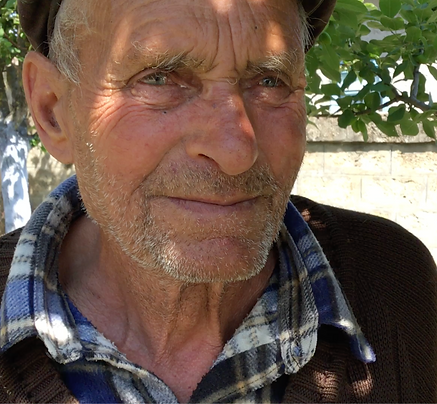
Identifier: HUNGER-DOHA-10-01
Respondent: Mykhailo Dmytrovych
Year of birth: 1936
Place of residence during the 1946–1947 famine: Village of Orikhivka, Novoivanivskyi District, Odesa Region, Ukraine
Interview date: 12 May 2018
Original format: video (MOV)
Duration: —
Language: Bulgarian
Field researcher: Yona Tukuser
Interview Transcript
I remember the famine of 1946 and 1947. “Hawk” patrols came and took all the grain from us, everything that was in the house. Hunger. Starving horses were dragged along, dogs and ground squirrels were eaten.
My brother and sister died during the famine. There was no rain, it was dry, and there was no harvest. These “hawks” could see that I had nothing, yet they still took everything and even ate themselves. They were from our own village — all Bulgarians. I know them, but they all died later.
They climbed into attics and took everything: grain, sunflower seeds, corn. Everything was taken to the collective farm. And then famine began. I remember the famine very clearly. We ate lamb’s quarters.
There were people who ate other people. On Gagarin Street, a woman named Maria killed her child, cooked it, and ate it.
A cart went through the village collecting the dead bodies — a full cart. They grabbed them by the legs and heads and threw them into a mass grave.
There was a boy who had been taken to the cemetery, but he came back alive.
© Yona Tukuser

Identifier: HUNGER-DOHA-10-02
Respondent: Khrystova Stepanida Mykhailivna
Year of birth: 1935
Place of residence during the 1946–1947 famine: Orikhivka village, Novoivanivskyi district, Odesa Region, Ukraine
Interview date: 12.05.2018
Original format: video (MOV)
Duration: —
Field researcher: Yona Tukuser
Interview Transcript
There was no rain and no harvest. Then the “yastrebky” came and took our grain. What was there to eat? We were starving. There was nothing to eat except grass.
Many people died from hunger. There was typhus and lice. I remember a neighbor screaming: “Give me at least a piece of bread.” I heard that people were eating people. My grandfather did not allow me and my sister to go outside, so that we would not be eaten.
© Yona Tukuser

Identifier: HUNGER-DOHA-10-03
Respondent: Iryna Mykolaivna
Year of birth: 1933
Place of residence during the 1946–1947 famine: Village of Orikhivka, Novoivanivskyi District, Odesa Region, Ukraine
Interview date: 12 May 2018
Original format: video (MOV)
Duration: —
Language: Bulgarian
Field researcher: Yona Tukuser
Interview Transcript
My father died in December 1946, and my mother in June 1947. Four of us were left as orphans: three girls and one boy. The boy was taken to a labor camp, and we three sisters remained.
We worked in the collective farm. They gave us half a kilogram of bread. I made flatcakes from lamb’s quarters.
We heard that people ate other people. Mothers ate their children.
Many people died… my God… they loaded them with pitchforks onto a cart and threw them into a pit in the cemetery — wherever they fell, that is how they stayed, sometimes face down…
© Yona Tukuser

Identifier: HUNGER-DOHA-10-03-2
Respondent: Stanieva Varvara Dmitrievna
Year of birth: 1930
Place of residence during the 1946–1947 famine: Kubey village, Bolhrad district, Odesa Region, Ukraine
Interview date: 12.05.2018
Original format: video (MOV)
Duration: —
Field researcher: Yona Tukuser
Interview Transcript
I was born in Kubey, and the famine caught me there. I wandered the land during the famine. It was very hard for me… I grew up without a mother and without a father… there were two of us children. I was three years old when my mother died, and seven when my father died. My sister took care of me. I did not go to school and do not know a single letter.
During the famine it was very difficult… we ate quinoa grass (lamb’s quarters). Many people died. Dogs ate people.
The men were taken to labor camps, and the women were left alone, with no one to work the land and nothing to work with.
My grandmother said that my grandfather went somewhere and never returned. After some time, people said that someone had eaten him.
© Yona Tukuser

Identifier: HUNGER-DOHA-10-04
Respondent: Maria Ivanovna Popova
Year of birth: 1937
Place of residence during the 1946–1947 famine: Village of Orikhivka, Novoivanivskyi District, Odesa Region, Ukraine
Interview date: 12 May 2018
Original format: video (MOV)
Duration: —
Language: Bulgarian
Field researcher: Yona Tukuser
Interview Transcript
There was a poor harvest in 1946. Grain was taken from the people, and because of this the famine began.
My father transported the bodies of people who had died from starvation by cart. One cart full of bodies every day. He also went to sell our clothes to buy grain.
There were five children in our family; two of them died from hunger.
Later, my father and three other men stole a sack of grain from the collective farm, and all four were sentenced to four years in Krasnoyarsk. When Stalin died, they were all released.
© Yona Tukuser

Identifier: HUNGER-DOHA-10-05-2
Respondent: Bochkovar Ivan Petrovych
Year of birth: 1957
Place of residence during the 1946–1947 famine: Orikhivka village, Novoivanivskyi district, Odesa Region, Ukraine
Interview date: 12.05.2018
Original format: video (MOV)
Duration: —
Field researcher: Yona Tukuser
Interview Transcript
My mother said that during the famine there was typhus. My mother lost both her mother and father, and she was left an orphan.
The “yastrebky” received state grain from Aliaga and sold it on the spot. Then they returned to the village and took grain from orphans that remained in their houses. Orphans were sent to orphanages, and the grain was taken and replaced with the grain that had been sold.
My mother also said that during the famine there were aggressive women who stole children. When children returned home from school, they were intercepted, lured away, then killed and baked in ovens. Neighbors reported one of these women to the village council. Later she was seen taking a baked child out of the oven. After that, the woman was sentenced.
© Yona Tukuser

Identifier: HUNGER-DOHA-10-05
Respondent: Paraskeviya Andreevna Ivanova
Year of birth: 1934
Place of residence during the 1946–1947 famine: Village of Orikhivka, Novoivanivskyi District, Odesa Region, Ukraine
Interview date: 12 May 2018
Original format: video (MOV)
Duration: —
Language: Bulgarian
Field researcher: Yona Tukuser
Interview Transcript
There were five children in our family. During the famine, I collected grass to boil and eat. Many people died of starvation.
The dead were collected on carts and thrown into a single pit in the cemetery. I saw dogs dragging corpses and tearing them apart to eat. One large dog grabbed a person by the leg and dragged the body down a slope, biting and eating it. Someone shouted “Hey!” and drove the dog away. It was terrifying.
Who was alive then? We were all like the dead, like dogs. There were rumors that people were eating people.
© Yona Tukuser

Identifier: HUNGER-DOHA-10-06
Respondent: Mykolova Zinaida Ivanivna
Year of birth: 1929
Place of residence during the 1946–1947 famine: Orikhivka village, Novoivanivskyi district, Odesa Region, Ukraine
Interview date: 12.05.2018
Original format: video (MOV)
Duration: —
Field researcher: Yona Tukuser
Interview Transcript
There were three children, father and mother. The famine began. We ate a horse. We ate a cow. Then sheep. We started selling clothes. Nothing was enough. We exchanged a winter blanket for one box of corn. My mother told us children: eat less, leave food for your father, he is bigger and works, he needs strength. My father said: “If you do not eat, I will not eat either.” We all ate together. And then… our father died… and then our mother died, and we remained three orphans. One child was taken to an orphanage, and I stayed at home with my sister. We grew up together.
Now when I remember it, I cry. My daughter asks why I cry, and I tell her: “Because you did not see the famine, but I remember what it was like, that is why I cry.”
There was drought, sun, the earth cracked. It was very frightening, how could one not cry.
I remember in winter how a dead person was pulled on children’s sleds, legs hanging down, head hanging, hitting the snow…
One neighbor came carrying rags taken from the dead. “Tie these rags, give me one shoe,” she said. I told her: “Go away, we are dying of hunger ourselves, what can I give you?” My father felt pity: “Zino, there are shoes in the hole in the chicken coop, give her one so she can bake it.” I went to the barn… I gave her one shoe so she could cook it…
We also baked shoes. You scrape them well with a knife… and chew them… and eat them. You lie down, then morning comes again. You go to work in the kolkhoz, where they gave soup with one piece of bread. I wanted to bring some food to my father. I brought a little soup in a box and gave it to him. My father was already exhausted and lying down, unable to stand. He did not survive. It was very hard.
People ate people. I remember going into one woman’s house and she was baking her own children in the oven, two small children. Outside there was police, taking out the baked children and putting them into a sack. The woman was taken away.
People baked children, dogs, cats. Dogs ate them; cats were also eaten, even though before people said cats were dangerous. But people ate everything—hunger makes a person not understand what they are eating.
We used to go with our sisters to the fields to catch ground squirrels and made “kavurma” from them. The next day we went to work in the fields, and the head of the kolkhoz said: “Sit in a circle, I will see what everyone is eating.” He walked inside and saw: some had boiled potatoes, some had nothing, and we had a bowl full of fried ground squirrels like kavurma. He said: “These people will survive, those who do not eat ground squirrels will die.” And it was true. Those who did not eat died.
In 1946 there was no harvest. How not to die of hunger—those “yastrebky” took all the grain. They walked with metal probes through the yards, found hidden grain and took everything. When they took the grain from people, the famine began.
When my mother died, my sister and I dug a grave, placed her on a door and carried her to the cemetery, and buried her. When my father died, it was the same. At that time people did not even want to dig graves. They said there was already an open grave, and we put him on a door and carried him to the cemetery. We covered him with cloth so that crows would not peck him. Because they did not allow immediate burial—more bodies would be placed there. Many people were buried there, placed as they fell: some lying, some sitting. If the deceased had good clothes, they were stripped, and the clothes were sold.
© Yona Tukuser

Identifier: HUNGER-DOHA-10-07
Respondent: Maria Vasylivna Stoyanova
Year of birth: 1941
Place of residence during the 1946–1947 famine: Village of Orikhivka, Novoivanivskyi District, Odesa Region, Ukraine
Interview date: 12 May 2018
Original format: video (MOV)
Duration: —
Language: Bulgarian
Field researcher: Yona Tukuser
Interview Transcript
I remember that during the famine, my neighbor had two daughters. One of them died, and the mother took her to the cemetery. A few days later, she returned to the cemetery, dug up her daughter, brought her home, and then cooked and ate her. I saw with my own eyes how she put the child into the oven.
We were playing with the children on the road, and that woman came to us holding a piece of halva in one hand and calling: “Come, I will give you halva,” while her other hand was hidden behind her back holding a knife.
We could not go out to play with other children; we were afraid.
© Yona Tukuser

Identifier: HUNGER-DOHA-10-08
Respondent: Khrystova Vasyla
Year of birth: 1934
Place of residence during the 1946–1947 famine: Orikhivka village, Novoivanivskyi district, Odesa Region, Ukraine
Interview date: 12.05.2018
Original format: video (MOV)
Duration: —
Field researcher: Yona Tukser
Interview Transcript
During the famine there were seven children in our family. I went to school, and there was a school canteen—we were fed there. They also gave us a small piece of bread. I did not eat half of it and brought it home to my mother. My father caught ground squirrels, and my mother baked them. Many people in the village were starving. I heard that people were eating people.
I remember going to a vineyard, picking a single branch of grapes, and on my way back, suddenly a man named Fetkerdyuv Mitia jumped out of an empty house and chased us down the whole street. He might not have eaten two, but he would definitely have eaten one. But we managed to escape.
© Yona Tukuser

Identifier: HUNGER-DOHA-10-08-2
Respondent: Maria Pencheva
Year of birth: 1932
Place of residence during the 1946–1947 famine: Village of Orikhivka, Novoivanivskyi District, Odesa Region, Ukraine
Interview date: 12 May 2018
Original format: video (MOV)
Duration: —
Language: Bulgarian
Field researcher: Yona Tukuser
Interview Transcript
There was a poor harvest in 1946, and the state took the grain we had. I was starving badly, I became swollen and thought I would die.
I heard that people were eating people. I heard that Simonets ate her husband Simon and threw his bones into the grass. In the cemetery, clothes were taken from the dead and sold.
My grandmother died and was buried in a beautiful dress, but the next day my mother went to the cemetery — the grave had been dug up, and my grandmother was lying completely naked, without clothes.
© Yona Tukuser

Identifier: HUNGER-DOHA-11-02
Respondent: Stoyanova Tetyana
Year of birth: 1971
Place of parents’ residence during the 1946–1947 famine: Lambrivka village, Tarutino district, Odesa Region, Ukraine
Interview date: 18.05.2018
Original format: video (MOV)
Duration: —
Field researcher: Yona Tukser
Interview Transcript
My father told me that during the famine he was 6 years old. He used to go to the places where grain was being collected, and the foremen would allow him to take one pea he could find among the grain. He spent the whole day sorting through piles of grain and brought home six peas. My mother cooked these six peas with goosefoot (lamb’s quarters) into a soup.
My grandmother and grandfather joined the kolkhoz, and there they were given food, and that is how they survived. In the village there were “yastrebky” who took all the grain from people as state deliveries. They came to check what each family was eating, to see if anyone had hidden grain or failed to meet their quotas.
There were cases of cannibalism. My grandmother said that small children were not allowed to go outside because there were cases of children being eaten.
One woman named Maria lost her mind from hunger and ate her own child, after which she was sent to prison. Georgieva Varvara also described one case: she entered a neighbor’s house and saw in a pot pieces of a child’s body being cooked. After that, that woman was imprisoned.
© Yona Tukuser

Identifier: HUNGER-DOHA-10-09
Respondent: Hanna Heorhiivna Novak
Year of birth: 1930
Place of residence during the 1946–1947 famine: Village of Orikhivka, Novoivanivskyi District, Odesa Region, Ukraine
Interview date: 12 May 2018
Original format: video (MOV)
Duration: —
Language: Bulgarian
Field researcher: Yona Tukuser
Interview Transcript
In 1945, my father was taken to a labor camp in Kemerovo. He escaped and was sentenced. He spent five years in prison in Norilsk.
In 1946 there was famine here. My mother had nothing to feed us. We sold everything. We went to Suvorove to sell clothes, and there they gave us one kilogram of corn in exchange.
We collected lamb’s quarters and boiled it.
There were rumors that people were eating children.
© Yona Tukuser

Identifier: HUNGER-DOHA-11-03
Respondent: Zagorska Stefania Stepanivna
Year of birth: 1939
Place of residence during the 1946–1947 famine: Golitsya village, Novoivanivka district, Odesa Region, Ukraine
Interview date: 21.05.2018
Original format: video (MOV)
Duration: —
Field researcher: Yona Tukuser
Interview Transcript
In 1946–47 it was very frightening. Hunger. Death. There was nothing to eat. During the war, everything that could be taken was taken away. Then in our village there were “yastrebky” who confiscated the grain people had stored.
My father died in 1947 from starvation.
I started working in the kolkhoz as a dairymaid. They gave 15 kg of flour and half a kilogram of oil. At first they did not want to hire me because I was too short and they said the cows would kill me. I cried and begged to be taken, otherwise we would have died of hunger. I worked as a dairymaid for 29 years. We went to the fields to collect fallen grains and eat them.
People ate horses, dogs, and cats. Those who ate cats all died because, they said, cats were poisonous.
There were many cases where women’s husbands died and they ate their own children. My aunt (Beliyoglo) lost her husband from hunger, and she had nothing to eat. She killed her two children and ate them—two girls aged 8 and 4. She also came to our house, knocking on the windows, but we did not open, otherwise she would have eaten either my mother or me. She walked through the streets looking for an open house to enter, kill, and eat. She was a tall woman. She lived on Lenin Street. Later she died.
© Yona Tukuser

Identifier: HUNGER-DOHA-11-04
Respondent: Petro Dmytrovych Petrov
Year of birth: 1929
Place of residence during the 1946–1947 famine: Village of Holitsia, Novoivanivskyi District, Odesa Region, Ukraine
Interview date: 18 May 2018
Original format: video (MOV)
Duration: —
Language: Bulgarian
Field researcher: Yona Tukuser
Interview Transcript
On 26 August 1946, a meeting was held at the village council regarding the creation of a collective farm and the beginning of agricultural collectivization. I was present at that meeting.
At the village council there was a group of eight people who went around confiscating grain from households. Once grain was taken, people were forced to join the collective farm. Those who resisted were labeled “kulaks” and dispossessed. Even small amounts of grain were taken to force people into the collective farm. Those who joined received a small ration; those who did not join received nothing.
I was part of this group of so-called bandits. I worked as a land surveyor, and there was no work for me in the collective farm, so the village head assigned me to this group. I was against what we were doing, but I had no choice.
We entered houses and used iron rods to search for hidden grain. The group was led by Zhelyazkov. At meetings he told us which families we would raid the next day. Secretly, I and another member of the group warned some families at night to hide their grain. If it had been discovered, we would have been executed.
Later, mass starvation began.
"Yastrebky" went from house to house throughout the village, knocking on every door...
I was out in the street at the time. Since we were the youngest, we were assigned to protect the confiscation commission from dogs.
One woman hid in the attic. Her husband had been taken away to work at the factory. The man in charge, Stepan Zhelyazkov, climbed up after her and pushed her. He threw her from the attic to the ground. A few days later, she died. Her name was Angelina Petrovna Decheva.
He pushed her because she had hidden from him. They had come to confiscate her grain, and she decided to hide.
Zhelyazkov saw that she had climbed into the attic and went after her. She tried to run from him and began climbing down the ladder, but he quickly pushed her from behind so that she would fall. A few days later, she died.
I was part of the group that confiscated grain from the villagers.
In February 1947, limited food aid (20 tons of grain) was distributed in the village of Holitsia, and was personally delivered house to house to those who were starving.
The famine in Bessarabia in 1946–47 was a genocide.
More than one thousand people died in the village of Holitsia alone.
I personally transported 20 to 50 corpses per day by cart.
Grain was taken from people in order to force them into collective farms. It was an ultimatum: give up all food or face death.
© Yona Tukuser
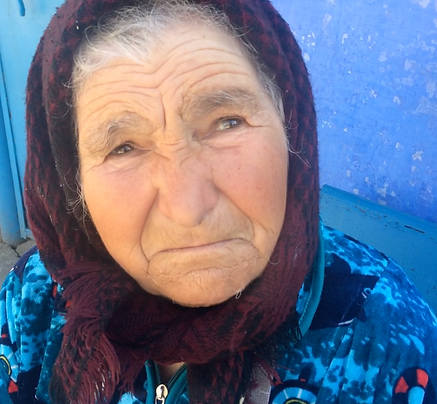
Identifier: HUNGER-DOHA-12-02
Respondent: Mikhailova Tana
Date of birth: 1935
Place of residence during the 1946–1947 famine period: Village of Vinogradne, Novoivanivka district, Odesa Region, Ukraine
Interview date: 21.05.2018
Original format: video (MOV)
Duration: —
Field researcher: Yona Tukuser
Interview Transcript
In 1946 there was no harvest. There was nothing to eat. The famine began. My parents sent me in 1947 to work in the Urals, and there I was also starving. In 1954 I returned.
Grain was taken away because of the great famine. Some people had nothing, and it was sent elsewhere, to other people. Grain was taken from here and carried away somewhere. There were hungry people who were supposed to be fed. But no one cared that we had nothing.
The dead were loaded onto carts, their legs dangling. They were taken to the cemetery and dumped into a pit, and the cart would return by another street to collect more bodies. Some people simply walked down the street and collapsed.
One day my father and I went to collect ears of grain. In the whole day we gathered one sack of rye. On the way back home, we were stopped and the sack was taken from us, and they wanted to send my father to prison. That evening I hid in a haystack and spent the whole night there alone.
There were people who ate other people. A woman killed her own son, cooked him into cold meat (aspic), and took it to the market to sell. Many such cases. It was very frightening during the famine.
© Yona Tukuser

Identifier: HUNGER-DOHA-12-01
Respondent: Mykhailo Petrovych Ganchev
Year of birth: 1929
Place of residence during the 1946–1947 famine: Village of Vinogradne, Novoivanivskyi District, Odesa Region, Ukraine
Interview date: 20 May 2018
Original format: video (MOV)
Duration: —
Language: Bulgarian
Field researcher: Yona Tukuser
Interview Transcript
Our village is very poor because the land here is very bad. About 600 people died in the village from hunger.
Now I hear many people say that the Soviet власти were harmful and bad, but I want to say that Stalin did not go from house to house to see what people had. Here, people buried 600 who died from famine. In 1946 the village was almost wiped out by hunger. We now have mass graves.
They went around taking grain from people. We had three large woven baskets full of corn cobs with only two or three kernels on each. A man from the “hawks” came with a cart and three others and took everything, and he said: “May you all die.” He was from Sambater. I remember it clearly. These people are still around, my daughter, still around.
During the famine, people sold aspic, but what kind of pork was it? It was human meat. Aspic made from human flesh. The mass grave in the cemetery was open, and every day 10–15 people who died of hunger were thrown in. There were people who went there and cut meat from the dead, cooked it into aspic, and sold it at the village market. A great famine — people bought and ate it.
People did not know; they thought it was just aspic. That is how we survived. People remained alive.
On a nearby street there was a house where two sisters lived, and they killed the husband of one of them and ate him. Later they died.
It was very hard then. But I want to say that Stalin did not go into barns or to people’s houses — it was these “enemy people” who came. And today they are still here, those who hate and say they were communists, but they do not know what communism is.
© Yona Tukuser

Identifier: HUNGER-DOHA-12-03
Respondent: Mikhailov Ivan
Year of birth: 1966
Place of parents’ residence during the 1946–1947 famine period: Village of Vinogradne, Novoivanivka district, Odesa Region, Ukraine
Interview date: 18 May 2018
Original format: video (MOV)
Duration: —
Field researcher: Yona Tukuser
Interview Transcript
The famine in Sambater was very severe. The first cause of the famine was natural: a severe drought. The second and main cause was that bread sent by the government never reached the people. The Komsomol members who were supposed to deliver grain to the village sold it instead and returned empty-handed. The state allocated grain specifically for Bessarabia because there was famine, but the grain never reached the population. And people died of hunger. After our research work, we established that 1,003 people died of starvation in the village in 1946–47. People were buried without any rituals. A cart would go through the streets collecting the dead, and they were buried in mass graves.
My mother said that her parents died of starvation in 1946–47. Two orphaned daughters were left, and in order to survive they had to eat grass, catch crows, and sell their clothes to buy food.
There were cases where people stabbed their own children or relatives, cooked them, made aspic, and sold it at the market.
My mother also said that in a neighboring street a woman killed her husband.
There was also an incident in our village involving Radov Dmitri. When he was a child during the famine, he was already half-dead. A cart carrying corpses passed through the street, and he was also loaded onto it. But before they reached the cemetery, the boy rolled off the cart and fell into the grass. A man passing by saw him lying there and moaning and took him home. That is how the boy survived and lived many years. I personally spoke with him, and he told me his story.
Old people also said that during the famine they boiled old boots and chewed them.
© Yona Tukuser

Identifier: HUNGER-DOHA-12-02-2
Respondent: Hanna Dmytrivna Dmytrova
Year of birth: 1935
Place of residence during the 1946–1947 famine: Village of Vinogradne, Novoivanivskyi District, Odesa Region, Ukraine
Interview date: 21 May 2018
Original format: video (MOV)
Duration: —
Language: Bulgarian
Field researcher: Yona Tukuser
Interview Transcript
It was a very confused time. Russia came, then Russia left; Romania came, stayed for a while, and then Russia came again.
In 1946 there was no harvest, and grain was taken from the people. The Komsomol members came, searched the yards, and took everything. Even lard was taken. They left us with nothing, starving, with nothing to eat. We ate boiled grass. It was a terrible time — I hope we never have to live through it again.
They came by cart through the village and collected the dead from the houses. Even if someone was still moving, not yet dead, they would load them onto the cart with the dead and say: “He will die anyway, why come again tomorrow.” It was very frightening.
In 1946 there was famine, and in 1947 the collective farm was formed. They gave only 200 grams of mamalyga to eat. It was good that delegates came from the Kharkiv tractor plant that was being established, and my father went, and later I did too. My father was swollen from hunger; the delegate did not want to take him, but he begged: “Take me, you can throw me out on the road if needed.” She took him and gave him bread from her own ration. By the time they reached Kharkiv, my father had recovered. She brought him to the director and said: “I took this man when he was swollen; I thought he would die on the way, but he survived.” The director asked him: “What kind of character do you have, can you work hard?” My father said: “Harness me like a horse, I will work. Just give me work, my family is starving at home.” And he was assigned to tractor assembly.
Dying from illness is hard, but dying from hunger is even worse. A person dies painfully when starving — there is nothing to eat.
During the famine, people made aspic from human flesh. They slaughtered people and cooked aspic. My aunt was killed during the famine, cooked into aspic, and taken to be sold at the market. Another aunt of mine, Elena, my father’s sister, was also killed and taken somewhere. They killed their own children and ate them. What can you do when there is nothing to eat — you are dying of hunger. You cross everything and kill your own child, kill and eat them. It was terrifying, extremely terrifying
© Yona Tukuser

Identifier: HUNGER-DOHA-13-01
Respondent: Ihor Mykhailovych Pushkov
Year of Birth: 1967
Father's Place of Residence during the 1946–1947 Famine: Kamianka village (Tashbunar, near Katlabuh), Bolgrad District
Interview Location: Izmail, Odesa Region, Ukraine
Interview Date: 12 May 2018
Original format: video (MOV)
Duration: —
Field Researcher: Yona Tukuser
Interview Transcript
...I know these stories from my father, who was born in the village of Tashbunar and told me about his childhood. He said that they kept a cow inside one of the rooms of the house, and the grain was also stored indoors. The window shutters remained closed. My grandfather made a hole in the wall, inserted a heavy log through it, and used it to brace the door from the inside so that it could not be forced open.
My father told me that one night people violently shook the windows, smashed the glass, and tried to break through the shutters to steal the cow. We hid and remained completely silent. If they had taken the cow, our family's last hope, we would have died. They were unable to take our cow. We stayed awake the entire night, frightened and trembling. The following day we learned that our neighbors had died because they had nothing left to eat. They had eaten their own cow long before.
There were also cases of cannibalism. Cannibals could be recognized by something that set them apart from others. The main thing people noticed was their gaze. It was an extremely heavy gaze. A person who had resorted to cannibalism looked at women and children not as human beings but as prey to be captured and possessed, like a hunter looking at game. People felt the oppressive force of that gaze. Those who had encountered a cannibal later told me that they could feel it: a heavy, crushing look that overwhelmed them and made them want to get away as quickly as possible.
© Yona Tukuser